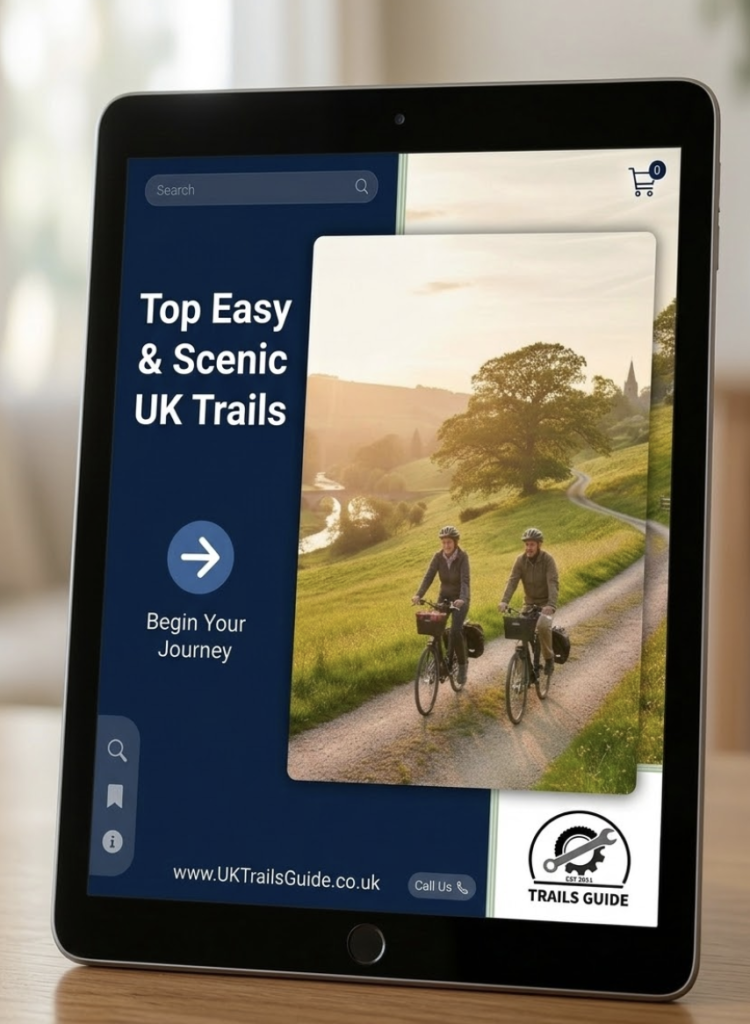
Looking for relaxed, scenic cycling routes without steep hills, traffic stress, or complicated planning?
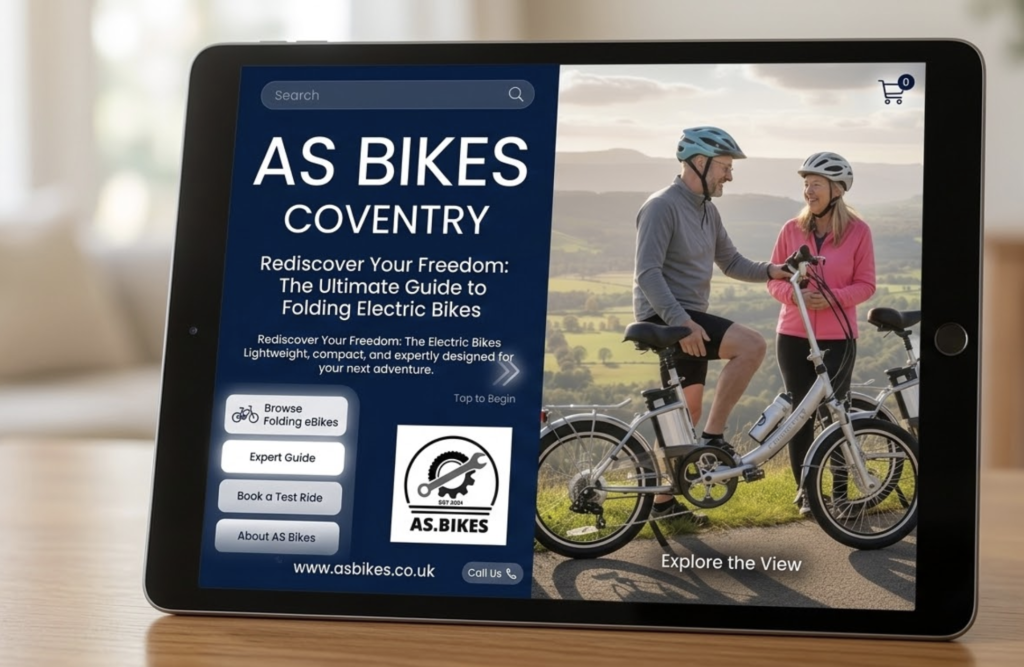
Our comprehensive brochure is designed to give you all the information you need, without the jargon and without the pressure.
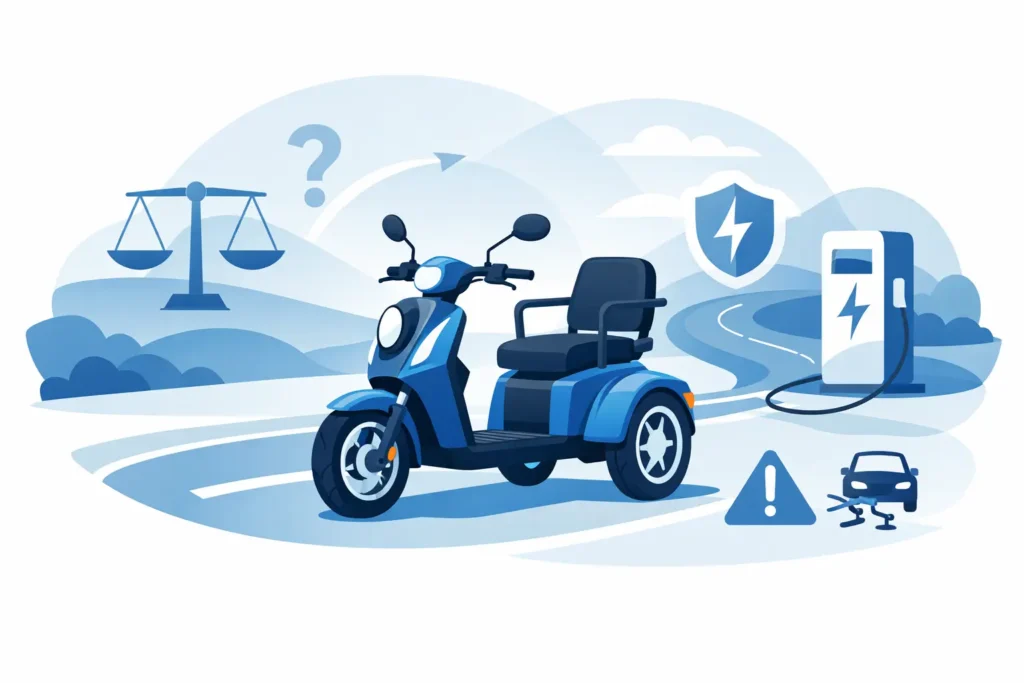
If you have ever put a foot down at a junction and wished the bike would simply stay upright on its own, it is easy to see why people ask, are electric trikes stable? For many riders, especially those returning to cycling, managing a mobility issue, or wanting something practical for holidays and day trips, stability is the main reason a trike feels so appealing in the first place.
The short answer is yes – electric trikes are generally very stable, particularly when starting, stopping and riding at a gentle pace. That is their big advantage. But stability is not quite as simple as “three wheels good, two wheels bad”. The way a trike is built, the way it is ridden, and where it is used all make a difference. A stable ride for one person can feel awkward to another if the model is not the right fit.
For everyday riding, an electric trike can feel reassuringly planted. You do not need to balance the machine while waiting at crossings, creeping through crowded areas, or setting off again. That can be a huge relief for riders who feel unsteady on a conventional bicycle, or who simply want a more relaxed way to get about.
This matters most in the moments when many people wobble on two wheels – low-speed turns, stop-start riding, mounting and dismounting, and carrying a bit of shopping. An electric motor helps here too. Instead of struggling to push off, you can use pedal assist to get moving smoothly, which often makes the trike feel calmer and easier to control.
For local errands, campsite use, promenades, holiday parks and gentle leisure rides, that extra confidence is often what makes the difference between riding occasionally and riding regularly.
A trike does not balance like a bicycle because it does not need to lean in the same way. That sounds obvious, but it changes the riding experience quite a bit. On a two-wheeled e-bike, the bike and rider naturally lean into corners. On a trike, the frame stays more upright, and that means you feel the road differently.
At low speeds, this is usually a benefit. The trike feels secure and predictable. At higher speeds or on tighter bends, though, a rider may notice more sideways movement through the seat and handlebars. That does not mean the trike is unsafe. It simply means it needs to be ridden as a trike, not as a bicycle.
This is one of the biggest misunderstandings people have when trying one for the first time. They expect it to feel exactly like a bike with an extra wheel. In reality, it is its own thing. Once that clicks, many riders become much more comfortable.
When people ask about stability, they are usually not talking about sporty cornering. They mean, “Will I feel safe getting on and off?” “Can I stop without worrying about toppling over?” “Will I feel steady on a path or quiet road?” In those areas, electric trikes are often a very good solution.
That is especially true for older adults, people recovering confidence after illness or injury, and anyone who wants to stay independent without wrestling with a heavy bicycle.
Not all electric trikes feel the same. Wheel size, frame shape, seat position, tyre width and overall weight all play a part. A lower centre of gravity usually helps the trike feel steadier, especially for riders who are nervous. A step-through frame can also make a big difference because it is easier to get on and off without strain.
The width of the rear axle matters too. A wider stance can improve planted, steady handling, although it may also make the trike feel larger to manoeuvre through gates, storage spaces or narrower paths. That is where practical use comes in. The most stable trike on paper is not always the most convenient one for your shed, motorhome or car boot.
Tyres are often overlooked, but they affect confidence more than people think. Properly inflated tyres with enough grip can help a trike feel settled and predictable. If tyres are too hard, the ride may feel skittish on rougher surfaces. If they are too soft, steering can feel sluggish.
Then there is the motor itself. Smooth, well-judged assistance helps stability. A motor that comes in too sharply can feel jerky when moving off, which is not what nervous riders want. Gentle, progressive power delivery is usually the better match for a comfort-focused electric trike.
This is where the answer becomes more nuanced. On hills, electric trikes can be very helpful because the motor takes the strain out of pedalling and reduces the wobble that sometimes happens when trying to climb slowly on a bike. Going uphill at a measured pace, many riders feel more secure on three wheels.
Downhill and around corners, sensible riding matters more. A trike should not be thrown into bends the way an experienced cyclist might lean a bicycle through a turn. Corners need to be taken more steadily. If you approach turns with that in mind, a trike can still feel very safe and enjoyable.
Cambered roads can also feel a little different on a trike. Because the machine stays upright rather than leaning naturally to compensate, you may notice the slope of the road more through your body. This is normal, but it can take a short while to get used to.
Three wheels give support, but they do not remove all risk. Sharp cornering at speed, uneven kerbs, poor surfaces and unsuitable loading can still upset handling. That is why honest advice matters. The best electric trike is not simply the one with the longest list of features. It is the one that suits how and where you actually ride.
Electric trikes can be a particularly good fit for people who want confidence first and speed second. That includes riders who have not cycled in years, people who find balancing difficult, and those who want to carry bits and pieces without the bike feeling tippy.
They also suit many customers who travel with their transport. If you keep a trike for use at a caravan park, campsite, marina or around a holiday destination, stability at low speed can make outings far more enjoyable. You are not wasting energy worrying about staying upright. You can simply get on and go.
For mobility support, that reassurance is often the whole point. Independence is not just about getting from A to B. It is about doing it comfortably, with confidence, and without feeling that every stop or turn is a challenge.
A proper setup helps enormously. Saddle height matters because if you are perched too high, the trike may feel less secure than it should. Handlebars should allow a relaxed posture rather than stretching you forward. If the controls are easy to reach and the seating position feels natural, the whole ride usually feels calmer.
A short test ride is worth far more than guessing from photos. Even riders who are certain they need a trike can be surprised by how differently models feel. Some prefer a more compact design that is easy to store and transport. Others want a roomier, more planted feel. Neither is wrong – it depends on the rider, the storage space available, and the type of journeys planned.
It also helps to practise in an open, quiet area before heading onto busier roads or shared paths. Most people settle quickly once they have had time to get used to steering, turning and judging the trike’s width.
For the right rider, yes – and often reassuringly so. Electric trikes are usually most stable where many people need support most: at slow speed, when starting and stopping, and during everyday riding where comfort and confidence matter more than performance.
The trade-off is that they need a slightly different riding approach, especially on corners and cambers. That is not a flaw. It is simply part of choosing a machine built for steadiness, ease and independence rather than sporty handling.
At AS Folding Electric Bikes, this is exactly why so many customers look at trikes in the first place. They are not chasing Lycra-and-hills cycling. They want practical transport that feels manageable, enjoyable and easy to live with.
If that sounds like you, the best way to think about stability is this: an electric trike will not do the riding for you, but the right one can remove a great deal of worry – and that alone can make getting out and about feel possible again.