

Looking for relaxed, scenic cycling routes without steep hills, traffic stress, or complicated planning?

Our comprehensive brochure is designed to give you all the information you need, without the jargon and without the pressure.
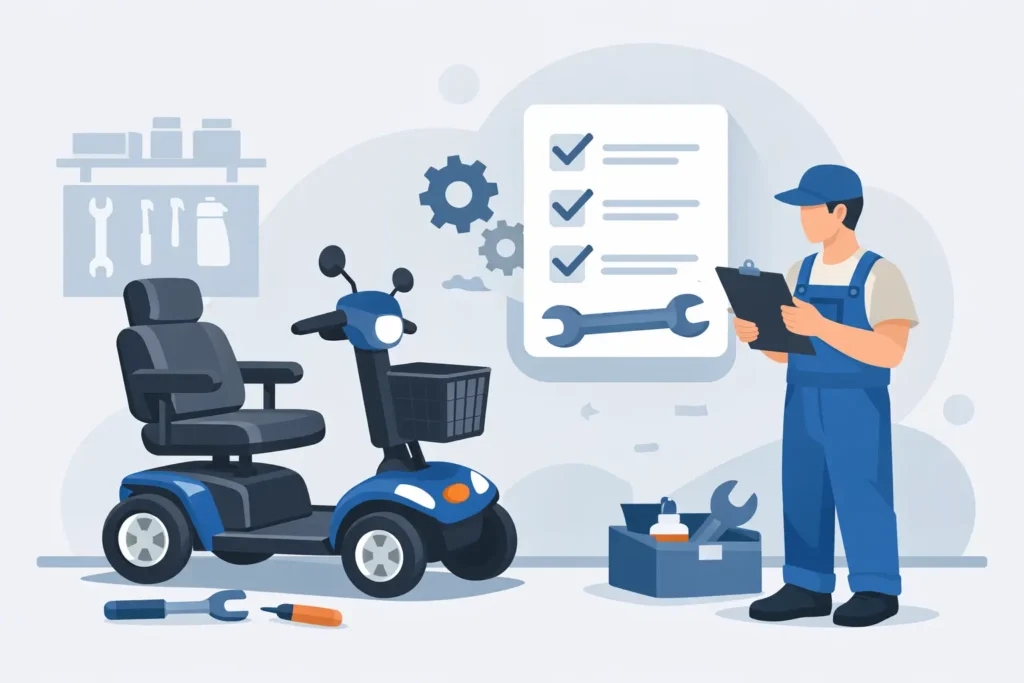
A mobility scooter often gives warning signs before it lets you down. The steering may feel slightly looser, the battery may not hold its charge as well as it used to, or you may start hearing a rattle that was not there before. That is exactly why a mobility scooter servicing checklist is so useful. It helps you catch small issues early, keep your scooter safe and comfortable, and avoid the frustration of finding a problem on the day you need to get out.
For many people, a scooter is not an occasional extra. It is what makes shopping trips, holidays, visits to family and everyday independence easier. A few regular checks can make a real difference to reliability, especially if your scooter is folded, lifted into a car, stored in a garage, or used in different weather through the year.
Servicing is not just about fixing faults. It is about noticing wear before it turns into a breakdown. Tyres wear gradually, batteries age slowly, and connections can loosen over time, particularly if a scooter is transported often. If you use your scooter for local errands or days out, those little changes can be easy to miss until performance drops.
There is also a comfort and safety side to it. A worn seat, weak brakes or underinflated tyres may not stop the scooter working, but they can make it less stable and less pleasant to use. Regular checks help keep everything feeling predictable, which is especially important if confidence and ease of use matter just as much as the journey itself.
Some checks are simple enough to do at home, while others are better handled during a proper service. The key is knowing the difference.
Start with the battery, because many scooter problems trace back to charging or battery condition. Check whether the scooter is charging fully and whether the charger behaves as expected. If the charge light pattern has changed, charging takes longer than usual, or your range has dropped noticeably, it may be time for closer inspection.
Look at the battery terminals if they are accessible on your model. They should be clean, dry and secure. Corrosion, damp or loose connections can affect performance. Also think about charging habits. Batteries do best when they are charged correctly and not left neglected for long periods, particularly over winter or between trips away.
If your scooter has been stored for a while in a motorhome, garage or shed, battery health deserves extra attention. Cold weather and long gaps between use can shorten battery life.
Tyres are easy to overlook, but they affect comfort, grip and stability. Check for cracks, uneven wear, embedded debris and low tread. If your scooter has pneumatic tyres, make sure they are inflated to the correct pressure. If the pressure is too low, steering can feel heavy and the battery may work harder than it should. If it is too high, the ride may feel harsher.
Solid tyres need checking too. They cannot go flat, but they can still wear down or become damaged. While you are there, inspect the wheels for wobble, loose fixings or anything that does not look quite right.
A scooter should stop cleanly and predictably. If braking feels delayed, jerky or weaker than usual, do not ignore it. Check that the freewheel lever is in the correct position, because a scooter in freewheel mode will not behave properly when you expect it to drive or stop.
Listen as well as feel. Squeaking, grinding or a change in stopping distance can all suggest wear or adjustment issues. Brakes are one of those areas where a quick home check is sensible, but repair work is usually best left to a technician.
The tiller, handlebars and controls should feel steady and responsive. Look for looseness, stiffness or unusual play in the steering. If the scooter pulls slightly to one side, that could be tyre-related, alignment-related or a sign of another issue.
Check the throttle control, speed dial, horn, lights and indicators if fitted. Nothing should stick, lag or feel unreliable. A control fault may seem minor when you are parked at home, but out on a pavement or crossing point it becomes much more serious.
Because mobility scooters are often chosen for comfort, the seat deserves a proper check. Make sure it is secure, stable and locking correctly if it swivels or adjusts. Worn padding, cracked upholstery or loose armrests may not sound urgent, but they can affect support and confidence, especially on longer outings.
Also check folding mechanisms, seat posts and adjustment levers. On portable scooters, these moving parts are used often and can loosen gradually.
If you use your scooter in poorer light or during winter afternoons, visibility matters. Test front and rear lights, indicators, brake lights if fitted, and reflectors. Replace failed bulbs or damaged lenses promptly.
Even if you mostly travel in daylight, working lights are still worth maintaining. British weather changes quickly, and a journey home can look very different from the journey out.
Inspect the frame for cracks, rust, impact damage or signs of stress around joints and hinges. This is particularly important on scooters that are regularly folded, lifted into vehicles or stored in tighter spaces. Frequent loading and unloading is practical and convenient, but it does place extra demands on key moving parts.
Check any locking catches and release mechanisms too. They should engage fully and not feel awkward or forced.
Look for trapped wires, worn insulation, loose plugs or any signs of rubbing. Electrical faults can be intermittent, which makes them frustrating to pin down. A cable that has been bent repeatedly during folding or transport may still work, but not always reliably.
If the display flickers, the scooter cuts out unexpectedly or power delivery feels inconsistent, book a proper inspection rather than hoping it settles down.
That depends on how you use it. If your scooter is used most days, a quick visual check every week is sensible. Tyres, battery charge and controls are worth keeping an eye on little and often. If it is used less frequently, check it before each outing, especially after storage.
A more thorough service should be arranged at regular intervals, usually annually for many users. Some scooters may need attention sooner if they cover a lot of ground, are transported regularly, or are used on rougher paths and varied terrain. There is no single rule that suits everyone. A lightly used travel scooter and a daily-use pavement scooter will not wear in the same way.
Cleaning, checking tyre condition, testing lights and keeping the battery charged properly are all sensible home tasks. So is paying attention to how the scooter feels. Owners often notice subtle changes before a clear fault develops.
Where it gets more technical is with brakes, motor issues, battery testing, electronic diagnostics and anything involving dismantling key components. That is where proper servicing matters. A family-run specialist such as AS Folding Electric Bikes will usually spot the sort of wear patterns and common faults that are easy to miss at home, particularly on folding and transportable models.
Sometimes the need for a service is obvious. Sometimes it is more of a gradual decline. If the scooter feels slower, less comfortable, harder to steer, or less dependable in its charging, it is worth booking in. The same applies if you hear new noises, notice vibration, or find that parts no longer adjust as smoothly as they once did.
It is also wise to have the scooter checked before a holiday, especially if you rely on it when travelling with a campervan, motorhome or boat. Problems are always easier to sort at home than when you are away from your usual support.
Good storage habits help reduce servicing issues. Keep the scooter somewhere dry if possible, and avoid leaving it for long periods with a neglected battery. If it folds, fold it carefully rather than forcing catches or hinges. When lifting it into a boot, take care not to knock controls or trap cables.
These small habits do not replace servicing, but they do help the scooter stay in better condition for longer.
Looking after a mobility scooter does not need to be complicated. A regular glance over the essentials, paired with proper servicing when needed, goes a long way towards keeping every trip simple, safe and stress-free.