Looking for relaxed, scenic cycling routes without steep hills, traffic stress, or complicated planning?
Our comprehensive brochure is designed to give you all the information you need, without the jargon and without the pressure.
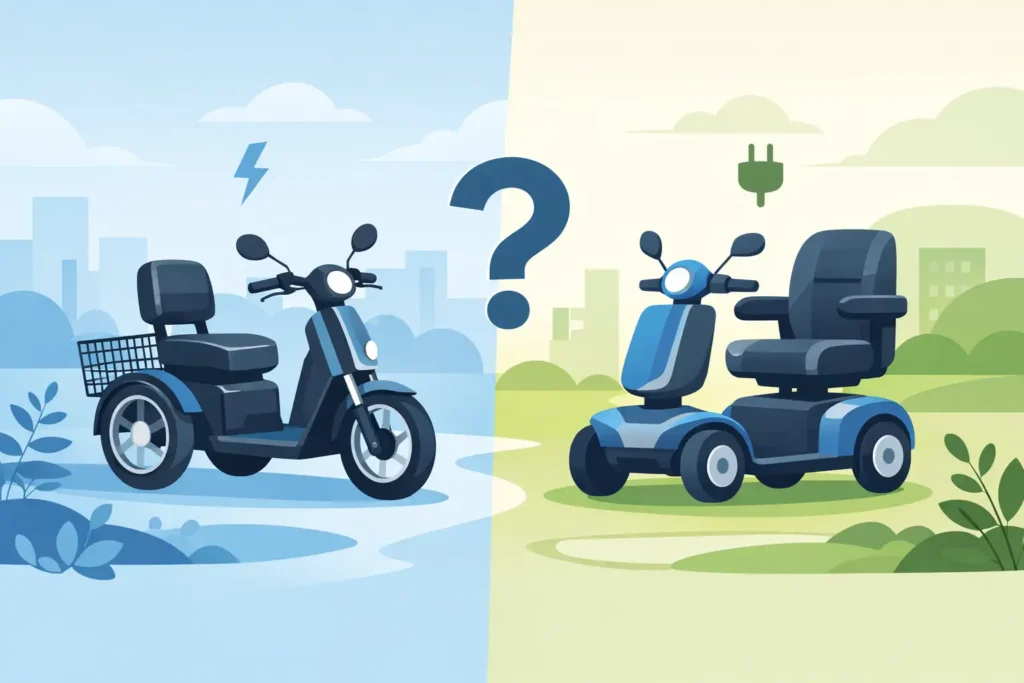
You usually know the question is serious when it starts with a practical problem: what will fit in the car, feel comfortable to use, and make everyday outings easier rather than harder? If you are weighing up an electric tricycle or mobility scooter, the right answer often comes down to how you like to get around, where you plan to use it, and how much support you want from the machine itself.
This is not just about wheels and batteries. It is about confidence. For some people, the freedom to ride along the seafront, pop to the shops, or get around a holiday park matters more than anything on a spec sheet. For others, ease of getting on and off is the deciding factor. Both options can make a real difference, but they do so in different ways.
At a glance, an electric tricycle and a mobility scooter might seem to serve the same purpose. Both are designed to make getting around easier, both are battery powered, and both can help reduce strain. But the riding experience is quite different.
An electric tricycle feels closer to cycling, just with more support and more stability than a standard two-wheeled bike. You sit on a saddle, steer with handlebars, and use pedals, though the motor helps take the effort out of hills, headwinds, and longer distances. It suits people who still enjoy the feel of riding and want something that keeps them active without asking too much physically.
A mobility scooter is more about simple, direct transport. You sit in a chair-style seat, place your feet on a platform, and control the scooter with handlebars or a tiller. There is no pedalling. That makes it a better fit for people who want less physical involvement, easier access, or more support for limited strength, balance, or joint movement.
An electric tricycle often appeals to people who want independence with a bit of enjoyment built in. It can be a lovely option for leisure rides, local errands, caravan and motorhome trips, or getting around larger parks and promenades without relying on the car.
The biggest advantage is that it gives you a familiar riding style with added reassurance. Three wheels can feel more confidence-inspiring than two, especially if balance is not what it once was. The electric assistance helps flatten out the effort, so a ride that may have felt daunting on an ordinary cycle becomes manageable again.
That said, a tricycle is still a cycle. You need to be comfortable sitting astride a saddle, steering through corners, and using pedals. Even with the support of a motor, it is not the same as simply sitting and pressing a control. Some riders take to it straight away, while others need a little time to adjust to the wider rear end and different turning feel.
Storage matters too. Some electric tricycles fold, which is a real benefit for people with limited space in a garage, motorhome, canal boat or car boot. But even a folding trike is often bulkier than many people first expect, so measurements and lifting weight should always be checked carefully.
A mobility scooter is often the better choice when comfort, ease of use and straightforward access come first. If walking is tiring, balance is unreliable, or getting on and off a bike-style saddle feels like a challenge, a scooter can remove a lot of barriers straight away.
For everyday tasks, that simplicity is hard to beat. A scooter can make shopping trips, visiting friends, moving around campsites, and getting from the car park to the town centre feel far less tiring. Many people appreciate the more supportive seat and the fact that they do not need to pedal at all.
This does not mean a mobility scooter is only for people with serious mobility limitations. Plenty of customers choose one because it makes days out more enjoyable. Instead of worrying about how far they can comfortably walk, they can focus on where they want to go.
There are trade-offs, of course. A scooter may not feel as recreational or as active as a tricycle, and some models take up more floor space than expected. If transportability is important, folding and boot-friendly designs can make a big difference, especially for holidays and regular travel.
This is often where the decision becomes clearer.
If you are reasonably mobile, still like the idea of riding, and want something that feels a bit more like a leisure vehicle than a mobility aid, an electric tricycle can be very appealing. It offers support without taking away that sense of being out for a ride.
If your priority is secure seating, minimal physical effort, and easy access, a mobility scooter usually has the edge. A swivel seat, armrests, or a step-through design can matter far more than people realise until they try both options.
It is worth being honest here. Many buyers start off thinking they should choose the more cycle-like option because it feels more familiar or more active. But if mounting, dismounting or pedalling is likely to become frustrating, that choice can end up sitting unused. The best product is the one you will feel happy and confident using regularly.
For many UK customers, especially those with campervans, caravans or limited home storage, this is the make-or-break point.
A product may look ideal in photos, but if it does not fit in the boot, the shed, or the storage bay, it soon becomes a problem. Folding designs are especially useful here, whether you are looking at an electric tricycle or mobility scooter. The difference is that folded dimensions, lifting weight and how awkward the item feels to handle can vary a great deal.
A mobility scooter designed for boot storage may split into lighter parts or fold down quickly for transport. That can suit couples who want to take it on trips without wrestling with something heavy. A folding electric tricycle can also be a clever option, but because of the frame and wheel layout, it may still require more room.
This is where specialist advice really helps. At AS Folding Electric Bikes, one of the biggest advantages for customers is being able to talk through real storage situations without the jargon and without the pressure.
The best choice is usually the one that matches your routine, not your idealised version of it.
If you picture yourself enjoying park paths, seafront routes, holiday sites and local rides for pleasure as much as necessity, an electric tricycle may be the better fit. It gives a little more of the riding experience and can feel more versatile for leisure use.
If your usual journeys are practical and frequent – shopping, appointments, promenades, garden centres, visiting family, getting around town – a mobility scooter may make more sense. It tends to be the easier tool for point-to-point travel.
Terrain matters as well. Smooth pavements and paths suit both, but uneven surfaces, kerbs, access points and tighter indoor spaces can favour one design over another. Your local area, and the sort of outings you enjoy, should guide the decision more than any headline feature.
Price always matters, but so does value over time.
A cheaper option that does not suit your needs is no bargain. It is usually better to think in terms of daily usefulness, comfort, and how easy it will be to maintain. Batteries, tyres, brakes, controls, folding mechanisms and replacement parts all matter in the long run.
This is another reason to buy with care. Good after-sales support can be just as important as the original purchase, especially if you plan to use your tricycle or scooter regularly. Knowing that help is available for servicing, parts and advice offers peace of mind that online listings and bargain offers often do not.
If you enjoy the idea of riding, want to stay a little more active, and feel comfortable with pedals and saddle seating, an electric tricycle can be a brilliant choice. It blends freedom, fresh air and practical support in a way that many riders find uplifting.
If you want straightforward comfort, easier access, and transport that asks less of your body, a mobility scooter is often the more sensible and more comfortable answer. It can turn tiring outings into manageable ones and help make travel feel possible again.
There is no prize for choosing the more adventurous option if it is not the right one for your body, your storage space, or your day-to-day life. The good choice is the one that helps you get out more often, with less hassle and more confidence.
A few quiet minutes spent thinking about how you really live – where you go, how you travel, and what feels easy now – will usually tell you far more than any brochure ever could.