Looking for relaxed, scenic cycling routes without steep hills, traffic stress, or complicated planning?
Our comprehensive brochure is designed to give you all the information you need, without the jargon and without the pressure.
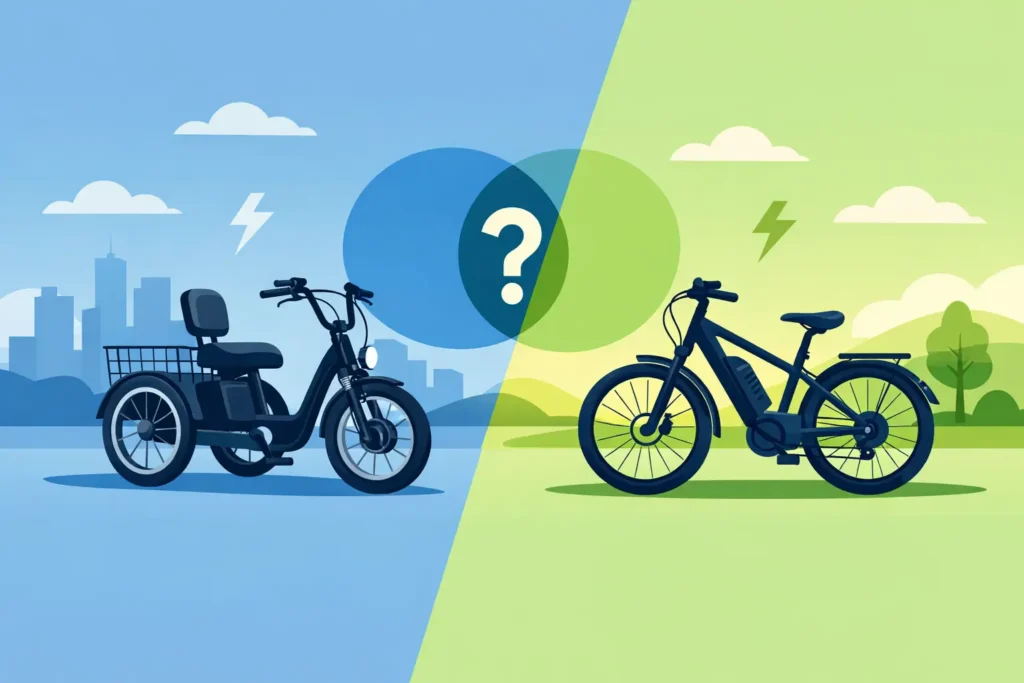
Choosing between an electric trike vs electric bike often comes down to one very ordinary moment – where will you keep it, and how confident will you feel using it once you get there? For many of our customers, this is not about speed or sport. It is about getting to the shops, enjoying a campsite, pottering around the marina, or taking the strain out of a day out without worrying about balance, lifting, or awkward storage.
That is why this comparison matters. On paper, both can offer pedal assistance, comfort and a welcome bit of independence. In real life, they suit rather different people.
An electric bike is still a bicycle at heart. It has two wheels, a motor to assist your pedalling, and a riding position that can range from upright and relaxed to more sporty, depending on the model. A folding electric bike adds the practical advantage of taking up less space in the car, campervan or hallway.
An electric trike, by contrast, gives you three wheels and a much more planted feel. That extra wheel changes the experience immediately. You do not need to balance in the same way when starting off, slowing down or stopping, and for many riders that removes a major barrier to getting back outdoors.
If you have not ridden for years, or your balance is not what it once was, that difference can feel far more important than motor power or battery range.
This is usually the deciding factor.
An electric bike feels lighter and more familiar if you are comfortable riding a standard bicycle. Once moving, it is smooth and easy, and modern pedal assistance takes the effort out of hills and headwinds. For riders who are steady on two wheels, it often feels natural within minutes.
An electric trike offers reassurance that an electric bike cannot. You can stop without wobbling. You can start off without that little moment of uncertainty. You can ride at a gentle pace without feeling pressured to keep momentum just to stay upright. For people with reduced mobility, joint stiffness, or concerns about falling, this can make all the difference.
That said, a trike is not simply a bike with an extra wheel. It handles differently on corners and narrow paths, and it can take a little time to adjust. Some riders assume a trike will instantly feel easier in every situation, but there is still a learning curve. It is stable, yes, but it is also wider and has its own riding character.
When people compare an electric trike vs electric bike, they often ask which is more comfortable. The honest answer is that comfort depends on what makes you uneasy in the first place.
If your main issue is physical effort, both can help. The motor reduces strain on knees and hips, and an upright riding position can keep things gentle on the back and shoulders. If your main concern is balance or confidence, the trike usually wins.
A bike can feel more nimble and easier to steer through tighter spaces. A trike can feel more secure at low speed and more relaxing when stopping and starting. Some riders also appreciate the easier access and more supportive feel that certain trike designs provide, especially if swinging a leg over a traditional frame is no longer ideal.
This is where practical testing matters. What feels comfortable for a ten-minute ride can feel different after a full afternoon around a holiday park or seafront.
This is where electric bikes, particularly folding ones, often pull ahead.
If you travel by motorhome, campervan, caravan or canal boat, space is precious. A folding electric bike is usually easier to lift, stow and transport. It can fit into a boot, a garage locker, or a smaller storage space far more readily than a trike. For couples who want to bring two cycles away with them, folding bikes can be the practical choice simply because they are manageable.
An electric trike takes up more room, whether folded or not. It is wider, bulkier and generally less convenient if you need to lift it in and out regularly. That does not make it the wrong choice, but it does mean you need to think carefully about where it will live and how it will travel.
For some customers, this is the whole answer. They love the idea of a trike, but when they picture loading it into a vehicle or finding space at home, an electric bike makes more sense. For others, the extra room is worth it because the confidence a trike gives them means they will actually use it.
A trike has a clear advantage here. Many electric tricycles are designed with practicality in mind, often including a rear basket or generous carrying space. For local shopping, personal items, picnic supplies or bits for a day out, that is genuinely useful. You are not trying to balance panniers or wear a heavy backpack.
An electric bike can still carry luggage, of course, especially with a rack or basket fitted. But for simple load-carrying ease, a trike is often the more straightforward option.
This matters more than many people expect. A bike or trike that helps you do the ordinary jobs is far more likely to become part of your routine.
An electric bike tends to suit a wider mix of routes. It is narrower, easier to manoeuvre through gates, bollards and tighter cycle paths, and often more comfortable if your rides include a variety of road and path conditions.
An electric trike is excellent on suitable surfaces and quieter routes, but the extra width can be limiting. Some access points are simply awkward. If your usual rides involve narrow paths, shared-use barriers or cramped storage areas, this can become frustrating.
On the other hand, if your riding is mainly along promenades, around parks, through holiday sites or on familiar local roads, a trike can be a joy. There is no prize for choosing the more compact option if it leaves you feeling nervous every time you stop.
Price varies by model, but electric trikes often cost more than electric bikes because of their design and specialist components. They can also be heavier and a little more involved when it comes to transport and storage.
That said, value is not just about purchase price. If a trike gives you the confidence to get out independently again, that value is real. If a folding bike slips neatly into your motorhome and comes on every trip, that is value too.
It is also worth thinking beyond the day of delivery. Good support, available spares and honest advice matter, especially if this is your first electric cycle or your first in many years. A family business such as AS Folding Electric Bikes tends to understand that buyers are not just choosing a machine. They are choosing a practical solution they need to live with comfortably.
An electric bike often suits riders who still feel confident balancing on two wheels, want something easier to transport, and need a compact option for travel or storage. It is especially appealing to couples, holidaymakers and anyone short on space.
An electric trike often suits riders who prioritise stability over compactness, want extra reassurance when stopping and starting, or need a more confidence-building option due to age, mobility changes or a break from cycling.
Neither is automatically better. The right choice depends on what has been stopping you from riding in the first place.
Before choosing, think less about specifications and more about your own routine. Do you need to lift it into a car? Will it live in a shed, hallway or motorhome garage? Are you confident on two wheels today, not twenty years ago? Will you use it for leisure, errands, or both?
It also helps to be honest about your confidence. Many people are drawn to bikes because they look more familiar, then realise a trike would have let them relax and enjoy the ride. Others assume they need a trike, then find a step-through folding bike is easier to store and perfectly comfortable for the journeys they have in mind.
The best choice is the one that feels manageable before, during and after the ride. That means easy to mount, easy to store, easy to trust and easy to use often.
A good electric cycle should make life feel simpler, not give you one more thing to wrestle with. If you keep that in mind, the right answer tends to become much clearer.