Looking for relaxed, scenic cycling routes without steep hills, traffic stress, or complicated planning?
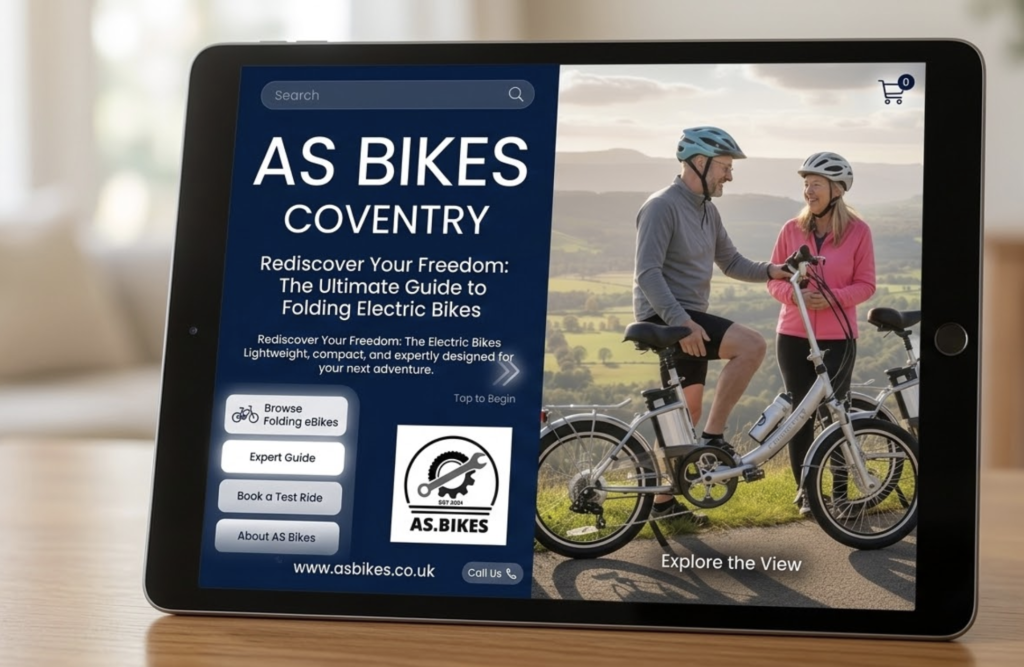
Our comprehensive brochure is designed to give you all the information you need, without the jargon and without the pressure.

In the world of cycling, there is a debate that has raged for decades. It is not about Lycra versus baggy shorts, or even electric versus manual power. It is about geometry. Specifically, the size of the wheels beneath you.
When you walk into a bike shop or browse a brochure, the visual difference is immediate. On one side, you have the compact, nimble-looking machines with smaller wheels. On the other, the larger, more traditional-looking bikes that seem ready to tackle a mountain. For the customer standing in the middle, particularly one looking for a folding electric bike, the choice can be paralysing.
At AS Bikes, we offer both. Our MK3 Electrobike sports the classic 20-inch wheels, while our Electrobike Plus rolls on full-sized 26-inch wheels. Both fold. Both have powerful motors. Both are excellent machines. So, why do we make both? And more importantly, which one is the right “tool for the job” for you?
To answer this, we need to look beyond the brochure specs. We need to delve into the physics of riding, the realities of UK infrastructure, and the practicalities of living with these bikes in a motorhome, caravan, or boat. This is the definitive guide to the 20-inch vs. 26-inch debate.
Historically, “folding bike” was synonymous with “tiny wheels.” The original folding bikes of the 1970s and 80s were designed purely for commuters hopping on and off trains in London or Tokyo. The wheels were small (often 16 inches or less) to ensure the folded package was as compact as a suitcase. Ride quality was a secondary consideration; the priority was getting it under an office desk.
However, the leisure industry has different demands. Our customers aren’t usually rushing to catch the 08:15 to Paddington. They are exploring the bridleways of the Peak District, navigating gravel towpaths along the Grand Union Canal, or riding along the promenade in Nice. They demand comfort, stability, and range.
This shift in usage forced the industry to evolve. Manufacturers realised that while portability is essential, it cannot come at the cost of a painful ride. This led to the standardisation of the 20-inch wheel as the “compact” norm – offering a better ride than the tiny 16-inch wheels – and the engineering marvel that is the 26-inch folding bike, a machine that refuses to compromise on size.
To understand the difference, we have to talk a little bit of physics. Don’t worry, we’ll keep it simple. The way a bike handles is largely dictated by the “Angle of Attack” and “Gyroscopic Effect.”
1. The Angle of Attack (Comfort) Imagine a wheel hitting a pothole or a tree root.
2. Gyroscopic Effect (Stability) A spinning wheel acts like a gyroscope; it wants to stay upright. The heavier and larger the wheel, and the faster it spins, the stronger this effect is.
So, given the physics, why would anyone choose the smaller wheel? The answer lies in utility and acceleration.
The King of Acceleration Smaller wheels differ in inertia. They are lighter and smaller, meaning they take less energy to get moving. In a stop-start environment – like a busy campsite, a town centre with traffic lights, or a winding path with lots of gates – the 20-inch wheel shines. It feels zippy. When you press the pedal, the bike surges forward instantly.
The Space Saver This is the big one for our motorhome and boating customers. While both bikes fold, the 20-inch MK3 folds smaller.
The Verdict for 20-Inch: Choose the MK3 if you prioritise storage space, if you do a lot of town riding, or if you want a bike that is easy to hop on and off. It is the ultimate “utility” vehicle.
The 26-inch folding e-bike is a rarer beast in the industry, and it is something we are incredibly proud of at AS Bikes. It breaks the stereotype that a folding bike has to look like a “circus bike.”
The Mile-Muncher If you plan to ride 20, 30, or 40 miles in a day, the 26-inch wheel is superior. The larger wheels carry momentum better. Once you are up to speed (15mph), the bike glides. On gravel tracks, forest fire roads, or poorly maintained British B-roads, the larger air volume in the tyres acts as a secondary suspension system, soaking up the buzz of the road.
Ergonomics for the Tall While both our bikes have adjustable seat posts and handlebars, physics imposes limits. If you are over 6 feet tall, a small-wheeled bike can sometimes feel a little cramped, or the “stem” (the part holding the handlebars) can feel like it is flexing because it has to be extended so high. The 26-inch Electrobike Plus has a geometry closer to a standard hybrid bike. It allows for a more stretched-out, natural riding position that reduces fatigue over long distances.
Off-Road Capability Let’s be clear: neither of these are downhill mountain bikes. However, many “cycle paths” in the UK are actually muddy, root-infested tracks. A 26-inch wheel with a treaded tyre can handle mud and loose gravel far better than a 20-inch wheel, which might skid or get bogged down. If your idea of a holiday involves “getting lost” in the woods, the larger wheels give you the confidence to tackle varied terrain.
The Verdict for 26-Inch: Choose the Electrobike Plus if ride quality is your number one priority, if you are a taller rider, or if you plan to tackle rougher country tracks. It offers the “big bike feel” with the bonus of folding.
In the world of manual pedal cycles, the difference between wheel sizes is huge because you are providing all the power. Small wheels can feel inefficient on long straights because you have to pedal more to keep them rolling.
However, we are talking about Electric Bikes. The motor is the great equaliser.
The 250W motor on our bikes masks the inefficiencies. If a 20-inch wheel loses momentum faster than a 26-inch wheel, the motor simply chimes in to top it up. You, the rider, barely notice the difference in energy expenditure. The pedal assist ensures that regardless of wheel size, you are cruising comfortably.
This means you don’t have to choose the big wheels just because you are worried about keeping up. The motor ensures the 20-inch bike can keep pace with the 26-inch bike all day long. This is great news for couples who might want different bikes – one prefers the low step-through of the MK3, the other prefers the ruggedness of the Plus. You can still ride together perfectly.
Before you make your decision, you need to be realistic about your vehicle. We strongly advise performing a “Boot Test.”
The Estate Car / SUV Owner: Most modern estate cars (volvos, audi avants, etc.) and SUVs can swallow a folded 26-inch bike quite easily. You might even fit two if you are good at “Tetris.” If this is your vehicle, you have the luxury of choosing the larger wheel for its ride comfort.
The Hatchback / Small Camper Owner: If you drive a VW Golf, a Ford Fiesta, or a smaller VW Transporter campervan, the 26-inch bike might be a squeeze. It might fit, but it might require putting the rear seats down, which isn’t an option if you have passengers. The 20-inch MK3 is designed to fit into standard car boots often without dropping seats.
The Weight Consideration It is an inescapable fact of engineering: more metal and more rubber equals more weight. The 26-inch Electrobike Plus will inherently be slightly heavier than the MK3. If you have to lift the bike high – for example, onto a bed in a rear lounge motorhome configuration – that extra kilogram or two makes a difference. However, if you are using a ramp to load them into a garage, the weight difference is negligible.
A common question we get asked is, “Is it harder to get tyres for the funny sizes?”
Rest assured, both 20-inch and 26-inch are global standards.
There is, however, a slight difference in wear rates. Because a 20-inch wheel has a smaller circumference, it has to rotate more times to cover the same distance as a 26-inch wheel. This means the bearings, tyres, and brake rims (if using rim brakes) experience more “cycles” per mile. Theoretically, they wear out faster. In reality, for the average leisure rider doing 1000 miles a year, the difference is minimal, but for a daily heavy-duty commuter, it’s a factor to consider.
We can talk about physics, geometry, and storage dimensions all day. But the only metric that truly matters is the smile on your face.
We have seen die-hard mountain bikers come in, swear they will only ride 26-inch wheels, try the 20-inch MK3, and fall in love with its agility and fun factor. Conversely, we have seen nervous riders try the 26-inch Electrobike Plus and instantly relax because it feels “safe” and familiar.
At AS Bikes, we don’t just sell bikes in boxes; we sell experiences. We encourage you to come to our farm in Coventry or find our stand at the next Motorhome & Caravan Show. Don’t just look at them folded up. Unfold them. Adjust the seat. Ride them across the grass. Put them in your car boot.
Summary Checklist:
Whichever you choose, you are joining the AS Bikes family. You are getting a machine built with passion, designed for the UK, and supported by a team that cares. The wheels might be different sizes, but the freedom they deliver is exactly the same.