
Looking for relaxed, scenic cycling routes without steep hills, traffic stress, or complicated planning?
Our comprehensive brochure is designed to give you all the information you need, without the jargon and without the pressure.
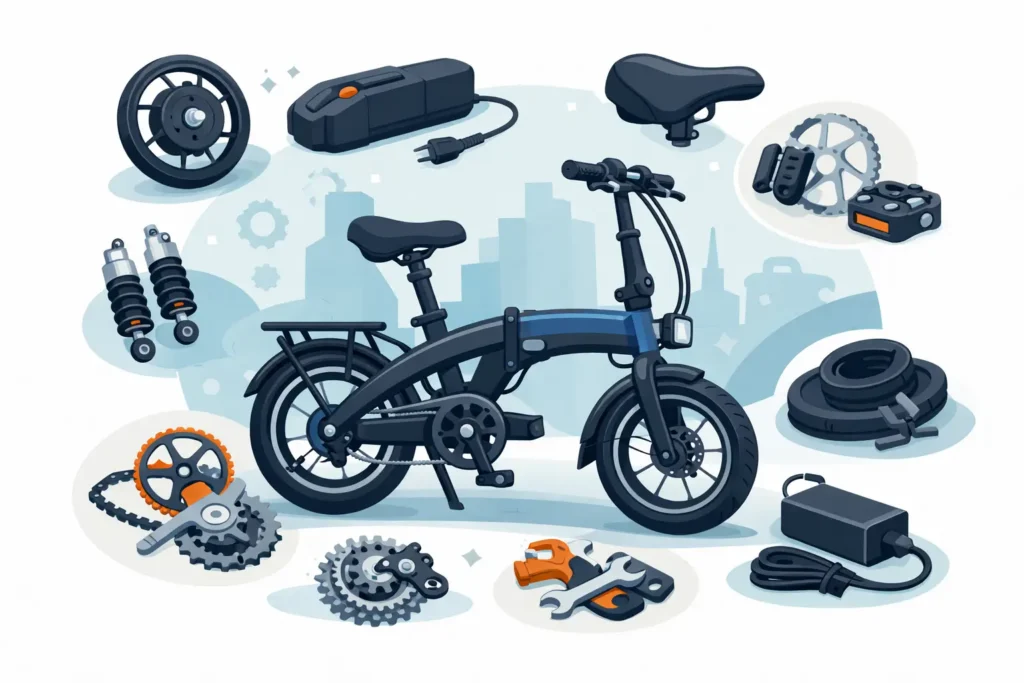
A folding e-bike tends to prove its worth at the least glamorous moments – lifting it into a car boot, storing it in a motorhome locker, or using it for the short trip that saves a long walk. That is exactly why spares for folding electric bikes matter. When a small but essential part wears out, the whole convenience of the bike can disappear very quickly.
For many riders, the concern is not performance in the sporting sense. It is whether the bike is ready when needed, easy to live with, and straightforward to keep going. A good supply of parts makes all the difference, especially for riders who rely on their bike for day trips, holidays, local errands, or simply getting about with less effort.
A folding electric bike does a job that a standard bike does not. It has the usual moving parts such as tyres, brake pads, chains and cables, but it also has hinges, latches, clamps and compact components designed to fold neatly into a smaller space. Those parts are practical and clever, but they do mean there is more to pay attention to over time.
That does not mean folding e-bikes are fragile. Far from it. A well-made model should give years of dependable use. But any bike that is regularly folded, unfolded, carried, loaded into vehicles and stored in tighter spaces will naturally see wear in slightly different areas. A rider who takes their bike in and out of a campervan every week may need different replacement parts from someone who mainly keeps it in a garage and uses it locally.
This is where sensible aftercare matters. Having access to the right spares at the right time can save frustration, prevent bigger repairs, and help keep the bike safe.
Some replacement parts are no different from those on an ordinary cycle. Brake pads are a common one. If you ride regularly, especially on hilly routes or in wet British weather, they will wear down and need replacing. Tyres and inner tubes are also high on the list, particularly if the bike is used on mixed surfaces or spends time standing in storage between trips.
Chains, freewheels and cassettes also wear, although the timing depends on mileage, riding style and maintenance. A bike used little and often on gentle local journeys may go a long time before needing drivetrain parts. A heavier-use bike, or one tackling steeper routes, may need attention sooner.
Then there are the folding-specific items. These can include frame clamps, hinge components, latch mechanisms, pedals that fold, seat post clamps and handlebar stem fittings. These parts are not changed as often as brake pads or tubes, but when they do wear, the bike can feel less secure or less convenient to use.
Electrical parts are another category altogether. Batteries, chargers, display units, sensors, wiring looms and controller components may all need replacement at some stage. In many cases the issue is not dramatic failure, but gradual decline. A battery may no longer hold the same charge it once did, or a charger cable may become damaged through repeated packing and unpacking.
In practice, the first parts to need replacing are usually the simple consumables. Tyres, tubes, brake pads and occasionally brake discs tend to come before anything more complex. That is reassuring, because these are usually routine jobs and part of normal bike ownership.
After that, it depends on how the bike is used. If it is folded and unfolded frequently, clamp adjustment and hinge inspection become more important. If it is stored for long periods between holidays, battery care becomes a bigger issue. If it is used for mobility support and reliability is essential, riders often prefer to replace worn parts sooner rather than waiting for a breakdown.
There is no single schedule that suits everyone. A couple using their bikes around campsites and coastal towns will place different demands on them than someone using one for weekly shopping trips. The best approach is to think about your own routine, rather than comparing your bike with someone else’s.
This is often where people come unstuck. With folding electric bikes, a part may look similar to another one online and still not be quite right. Wheel size, brake type, connector style, battery fitting and frame design all matter. Even within one brand, parts can vary across model years.
That is why buying purely by appearance can be risky. A charger may have the same shape plug but the wrong output. A hinge part may seem close enough but not fit safely. A generic tyre may fit the rim but not give the clearance the bike was designed for.
The safest route is to match the part to the exact bike model wherever possible. If you are unsure, it helps to check photographs, measurements, serial details or the wording printed on the old part. A good specialist will usually ask sensible questions before suggesting a replacement, and that is a sign of proper support rather than sales pressure.
Bikes rarely go from perfect to unusable overnight. Usually there are clues. Brakes may start to squeal or feel less sharp. A folding latch may begin to feel stiff. The battery may not last as long on a familiar route. A pedal may develop play, or a tyre may show cracking on the sidewall.
These are the moments to act. Leaving a worn part in place can turn a modest repair into a more expensive one. A stretched chain can wear out other drivetrain parts faster. Neglected brake pads can damage the disc or rim. A loose clamp can make riding feel uncertain and should never be ignored.
For many customers, especially those planning a holiday, a quick check before travelling is well worth it. It is much easier to sort a tyre, tube or charger at home than when you are already away.
Not every part needs a workshop, but not every part is a home job either. Replacing an inner tube is one thing. Diagnosing an electrical fault is quite another. The trick is knowing where simple maintenance ends and proper servicing begins.
If you are confident with basic bike care, it makes sense to keep a few essentials to hand. Inner tubes, a suitable pump, brake pads, perhaps a spare tyre if you travel often, and any model-specific item that would be awkward to source at short notice can all be sensible to keep nearby.
For electrical parts or folding mechanism issues, expert advice is usually the better option. Safety matters more than guesswork. A family-run specialist with real after-sales experience will understand that customers are not asking for jargon. They simply want the bike to work as it should and to feel confident using it.
That is one reason many riders value support from a business such as AS Folding Electric Bikes. The right part is important, but so is having someone who understands how the bike is actually used in everyday British life.
Good maintenance is less about fuss and more about habit. Keep the bike clean, but avoid drenching electrical areas. Check tyre pressures regularly, because under-inflated tyres wear faster and make pedalling harder. Keep the chain clean and lubricated. If the bike folds, open and close the mechanism carefully rather than rushing it.
Battery care also makes a real difference. Store it according to the maker’s guidance, especially in colder weather, and avoid leaving it completely flat for long periods. If the bike is not being used for weeks at a time, a little preparation before storage can save trouble later.
It also helps to deal with adjustments early. A clamp that needs tightening or a brake that feels slightly off is easier to sort before it becomes a larger issue. Small checks, done regularly, are usually enough.
Price matters, of course, but it should not be the only consideration. The cheapest part is not always the best value if it wears quickly, fits poorly or compromises safety. That is especially true for brakes, batteries, chargers and any part connected to the folding frame.
Compatibility, reliability and support are often worth more than saving a few pounds. For riders who use their bike to stay independent, get about on holiday, or avoid unnecessary walking, dependable parts are part of the bigger picture. They keep the bike useful, comfortable and ready for the next outing.
If you own a folding e-bike, it makes sense to think about spares before you urgently need them. A little planning now can mean fewer interruptions later, and more time enjoying the freedom that made you choose a folding bike in the first place.